
The Throughput Mastery Framework part III - The Scorecard
This blog was originally published in the Throughput Newsletter on 3/26/26
Most manufacturing owners think they need:
Better reports
Better dashboards
Better KPIs
Better data
Better software
And while those things can help, they usually aren’t the real problem.
The real problem is that the business still depends on the owner to drive execution.
In other words:
You are still the bottleneck.
The Scorecard Matters More Than Most Leaders Realize
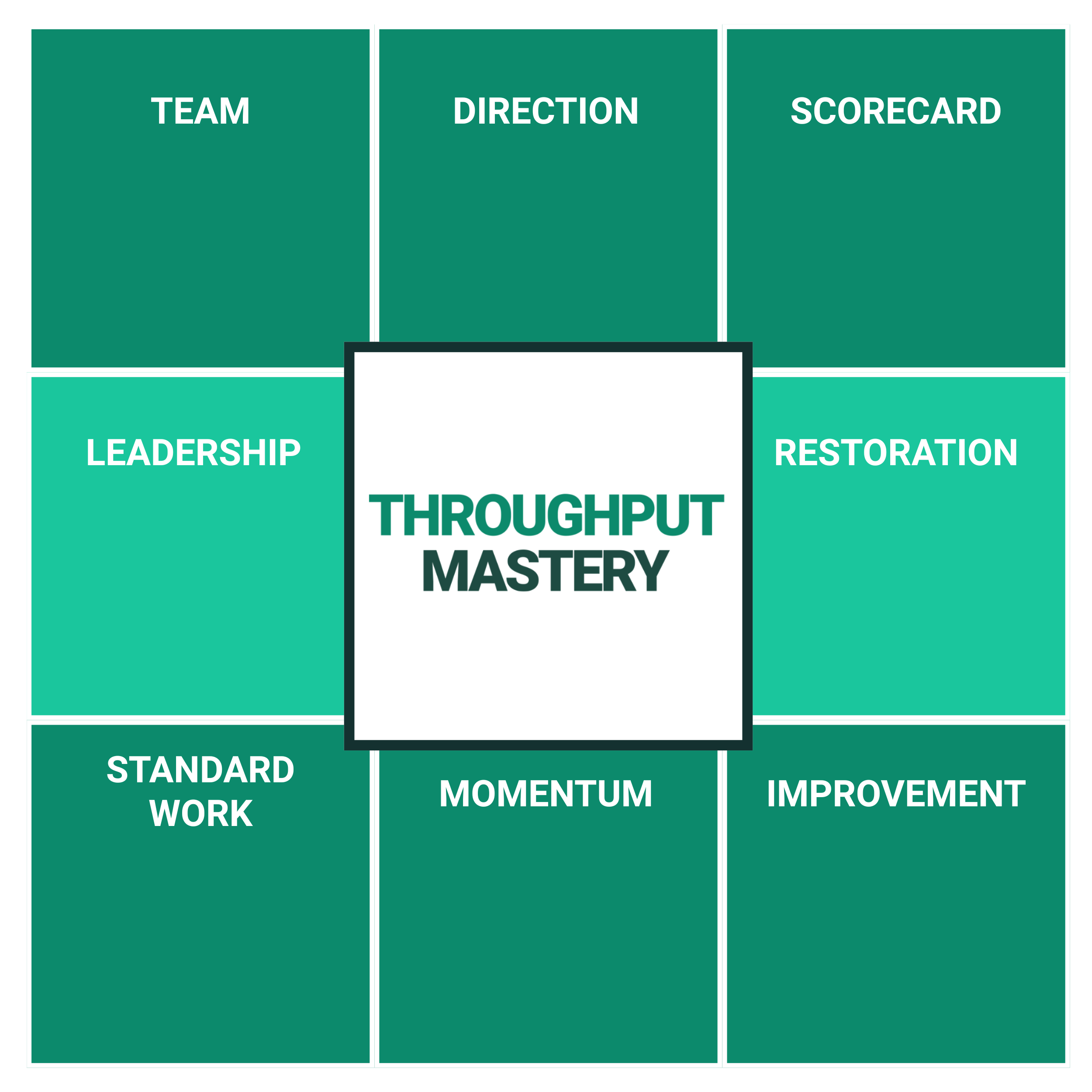
Inside my Throughput Mastery Framework, one of the core pieces is the Scorecard.
If you’re the kind of owner who wants to know whether the company is actually improving or quietly drifting off course, your Scorecard is indispensable.
Your Scorecard should function as:
Your dashboard
Your status check
Your early warning system
Your team’s focus mechanism
Your company’s pattern recognition tool
A good Scorecard helps you identify problems long before they become painful. And more importantly, it helps your team identify them too.
Because the goal is not for you to become more informed. The goal is for the business to stop depending on you to notice and solve everything.
What Makes a Good Manufacturing Scorecard?
Most companies either:
Track almost nothing
Or drown themselves in metrics nobody actually reviews
A good Scorecard typically has somewhere between 5–15 metrics directly tied to the company’s Direction.
Less than that, and you’re probably missing important patterns.
More than that, and your team usually can’t gather, verify, and review the data consistently enough for it to matter.
The metrics themselves matter too.
Operators Need Leading Metrics
Operators should primarily track leading indicators:
Scrap parts per day
On-time delivery
Prospecting activity
Quotes sent
Machine uptime
Setup reduction
Leading metrics measure actions. They show whether the team is doing the work that should eventually produce results.
Leadership Needs Lagging Metrics
Leadership should review lagging indicators:
Profit
Revenue
New sales
Gross margin
Booked work
Customer retention
Lagging metrics measure the outcomes of previous actions.
The problem is that most manufacturing companies obsess over lagging metrics while barely managing the leading ones. Which means when results slip, the owner gets dragged back into firefighting mode because nobody can clearly identify:
Why the result changed
What actions caused it
What needs to happen next
So the business defaults back to the same operating system:
"Something’s wrong. Go ask the owner."
That’s founder dependency. That’s bottleneck behavior.
Timely Data Beats Perfect Data
Another mistake I see constantly:
Leaders wait too long for “perfect” information.
Yes, accurate data matters. But there’s always a tradeoff between:
Perfect accuracy
Speed of feedback
In most manufacturing businesses, timely data is more valuable than perfectly polished data that arrives three weeks late. Because even imperfect data still reveals patterns. And patterns let your team investigate before small problems become expensive ones.
The Most Important Part of a Scorecard
Most Scorecards fail for one reason:
Nobody consistently reviews them.
The review process itself is where the value is created. Not the spreadsheet, not the software, not the dashboard.
A Scorecard should not be:
Something reviewed casually
Something skipped when schedules get busy
Something the owner looks at alone
Your team should be involved. Because if only the owner understands the numbers, then the business still depends on the owner. And once again: You are still the bottleneck.
Why Your Scorecard Is Pointless
Here’s the uncomfortable truth.
You can:
Clarify your company Direction
Build a great team
Create the perfect Scorecard
Track every KPI imaginable
…and still build a company that completely depends on you.
Because none of those things matter if your team still freezes when problems appear. If the numbers slip and everyone turns to ask:
"Now what, boss?"
then your systems haven’t actually created ownership. They’ve just created better reporting.
That’s why so many manufacturing owners feel trapped. The systems exist. The meetings exist. The KPIs exist. But execution still runs through one person.
The Real Goal Isn’t Better Metrics
The goal is not to build a prettier dashboard.
The goal is to build a professional business that can operate and improve without your direct involvement.
A business that:
Solves problems without you
Maintains momentum without you
Continues executing without you
Grows without you carrying every initiative personally
Because if the business cannot function without you:
You can’t truly step away
You can’t fully scale
And eventually, growth slows because the company’s capacity is limited by yours
That’s what being the bottleneck actually means.
What Actually Creates Freedom
If you want to:
Take a real vacation
Turn your phone off
Stop firefighting constantly
Build something valuable enough to sell someday
…then your team needs more than metrics.
They need:
Clear ownership
Decision-making authority
Defined escalation paths
Accountability
A management system that drives action
A framework is useful.
But a business that can execute and improve without your constant intervention is life-changing.